Ask most print shop managers what keeps them up at night, and health and safety inspections aren’t usually at the top of the list, but they should be. Cleaning ink from rollers, plates and machine housings is one of the most routine jobs in a pressroom, and it’s also one of the most overlooked fire hazards. Traditional solvent-based ink cleaners, white spirit, IPA blends, MEK, toluene and similar products are flammable liquids, stored and used in open trays, buckets and soaked rags, often right next to the machine that just printed the job.
This isn’t a fringe concern. The Health and Safety Executive (HSE) singles out printing as an industry with specific, named fire and explosion risks, separate from its general workplace guidance — and cleaning solvents are one of the main reasons why.
Why solvents used for ink cleaning are genuinely dangerous
- Low flash points mean vapour ignites easily
Many traditional ink and blanket-wash solvents have flash points well below room temperature or only slightly above it. That means they’re giving off ignitable vapour constantly while sitting open in a tray, not just when heated. HSE guidance on printing explicitly flags explosions in dryers caused by high blanket-wash solvent vapour levels as one of only three named fire risks specific to the industry — alongside paper fires in dryers and flammable-ink fires in flexo/gravure printing.
- Static electricity is a built-in ignition source
Printing generates static as substrate moves rapidly through rollers and machinery, and solvent vapour needs very little energy to ignite once it’s in the flammable range. This isn’t theoretical — a UK printing plant explosion in 1998 was caused by exactly this mechanism: a static spark generated while filling an ink vat ignited flammable solvent vapour, causing a fire and explosion. The same ignition pathway (static discharge, solvent vapour, fire/explosion) has recurred in the printing sector internationally since, including a solvent-related ink fire in the Netherlands in 2011.
- Evaporation compounds the risk instead of reducing it
Because these solvents evaporate quickly, workers use more of them, more often, to get the same cleaning result — which means more open containers, more airborne vapour, and more frequent handling. It’s a hazard that gets worse with use, not better.
- It’s a legal duty, not just good practice
Under the Dangerous Substances and Explosive Atmospheres Regulations 2002 (DSEAR), any workplace using flammable solvents must formally assess fire and explosion risk, classify hazardous areas, and control ignition sources. HSE’s own printing-specific guidance recommends, as a control measure, substituting solvent-based products for water-based or non-hazardous alternatives where possible — it’s the regulator’s first suggested fix, not an afterthought.
What the data tells us – and what it doesn’t
It’s worth being straightforward here: there isn’t a single published UK dataset that isolates “fires caused specifically by ink-cleaning solvents in printing” over the past decade. The Home Office’s official fire statistics record incidents by property type and general cause, not by industry-and-activity combination at that level of detail, so a precise “X fires per year” figure for this exact scenario doesn’t exist as an official statistic — and we won’t invent one.
What is well documented:
- Human error is a major factor. UK Government figures cited by fire safety bodies put human error behind roughly 85% of workplace fires — and solvent handling (open containers, poor storage, static, ignition sources nearby) is exactly the kind of everyday human-error scenario DSEAR is designed to close down.
- Flammable liquids are a recognised, material contributor to industrial fires. US National Fire Protection Association data (the most granular publicly available breakdown of this kind) found flammable or combustible liquids caused around 10% of structure fires in industrial and manufacturing properties, but were responsible for roughly 40% of civilian fire deaths and 30% of injuries in that property category — disproportionate harm relative to how often they’re the cause.
- HSE treats it as a live enforcement issue. Prosecutions for DSEAR and flammable-substance failures continue to appear regularly in HSE’s enforcement records, with fines running from tens of thousands of pounds upward, on top of downtime, damaged equipment, and reputational cost.
The honest summary: the exact incident count isn’t published, but every regulator, industry body and real-world case we can point to agrees that the mechanism – flammable solvent, vapour and an ignition source is a live, recurring risk in printing environments, and it’s one of the few risks in a pressroom that’s entirely avoidable by changing what’s in the cleaning bucket.
The non-hazardous alternative: how EN685 changes the risk profile

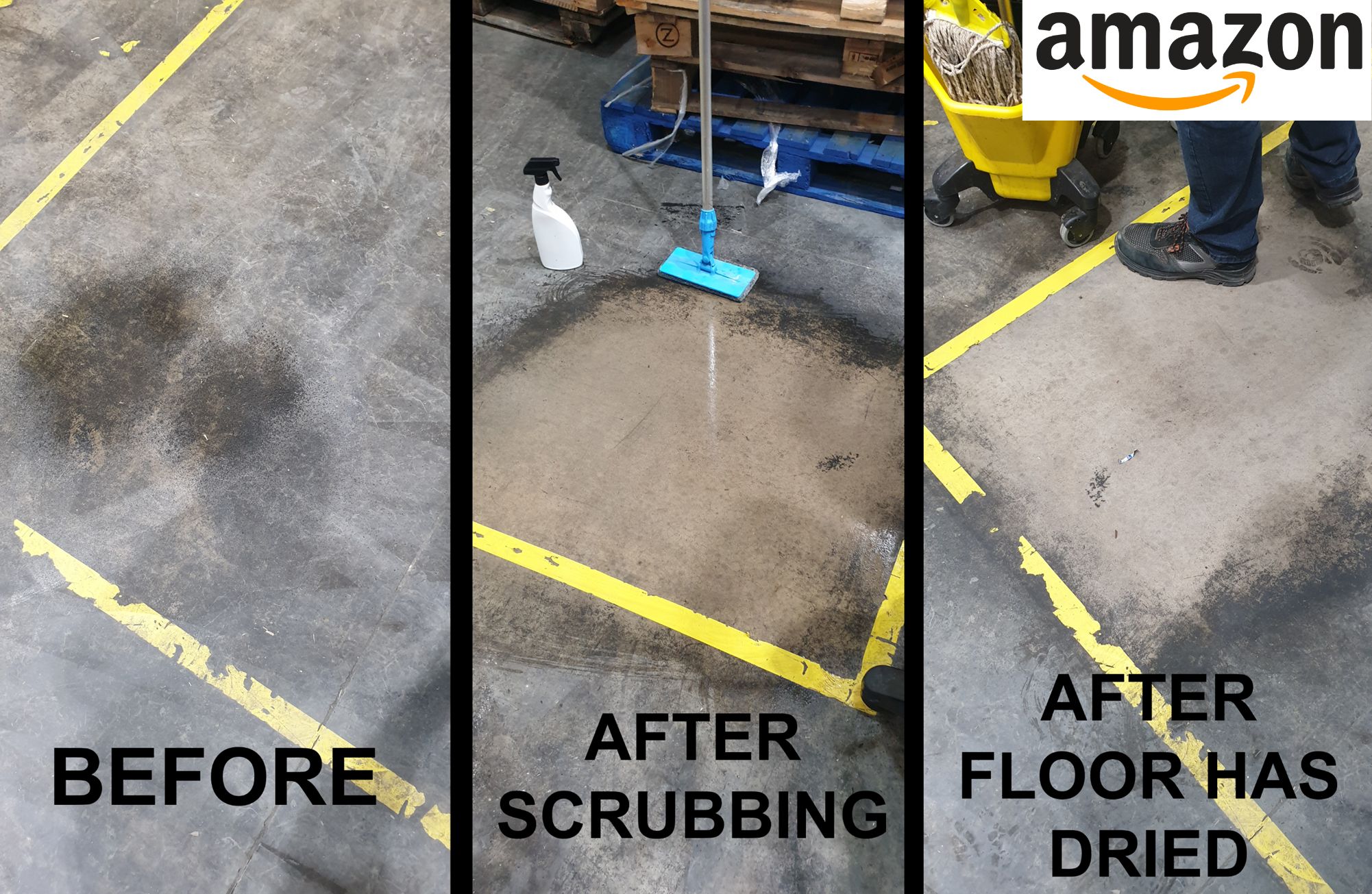
EN685 was developed as a plastic-safe, non-hazardous cleaner, and the same formulation used across the UK for graffiti removal is supplied to printing companies to remove cured and dried ink from rollers, plates, print heads, machine housings and floors. A few facts worth knowing, taken directly from the current EN685 Safety Data Sheet:
| Traditional solvent ink cleaners | EN685 | |
| CLP classification | Typically Flam. Liq. 2/3 (flammable) | Not classified |
| Flash point | Often below 40°C | Above 65°C |
| DSEAR flammable-liquid duties | Apply in full | Falls outside the flammable-liquid threshold |
| Storage | Specialist flammables cabinet required | No specialist flammable-liquid storage required |
| Typical usage volume | Baseline | 25–30% of the volume, and reusable across multiple passes |
| Biodegradability | Varies, often poor | Readily biodegradable |
| Effect on Perspex / polycarbonate guards | Can fog, melt or scar | Plastic-safe |
Two things stand out for a print shop specifically:
It removes the fire risk at source, not just the symptom. Because EN685 isn’t classified as a flammable liquid under CLP and has a flash point well above the threshold that triggers DSEAR’s flammable-liquid controls, it can be used and stored in open trays without the same explosion-risk profile, specialist cabinets or hazardous-area classification that a solvent wash demands. That’s a direct reduction in COSHH and DSEAR administrative burden as well as physical risk.
It’s more cost-effective for two separate reasons, not just one. Traditional solvents lose product to evaporation before the cleaning job is even finished; that’s part of why they’re used in larger volumes and bought more often. EN685 doesn’t evaporate in the same way, which shows up in cost in two distinct places: first, customers typically use only 25–30% of the volume of the equivalent solvent job to get the same result; second, because the product isn’t lost to the air, the same batch can be reused across multiple cleaning passes rather than being used once and topped up. Put together, that lower usage rate plus re-usability is what makes EN685 cost-neutral against cheap solvents in practice. Even though solvent itself often has a lower price per litre, you’re not just buying less of it; you’re getting more cleaning cycles out of what you buy.
The bottom line for print businesses
Solvent-based ink cleaning carries a fire and explosion risk that HSE names specifically for the printing industry, that DSEAR legally requires you to assess and control, and that has caused real incidents in UK printing plants before. Switching to a non-hazardous, non-flammable alternative like EN685 doesn’t just reduce that risk; it removes a category of regulatory burden (specialist flammable storage, hazardous area classification) and cuts consumption and repeat purchasing at the same time, making it a rare case where the safer option is also the cheaper one to run.
FAQs
Is EN685 flammable?
No. EN685 is not classified as flammable under CLP Regulation (EC) No. 1272/2008 and has a flash point above 65°C, well outside the range that triggers DSEAR’s flammable-liquid duties.
Why are traditional ink-cleaning solvents such a fire risk?
Most have low flash points, so they give off ignitable vapour at room temperature. Combined with the static electricity generated during printing, that vapour can ignite from a single spark — a mechanism that has caused real explosions in UK printing plants.
Does switching to EN685 remove our DSEAR obligations?
It significantly reduces them. Because EN685 isn’t classified as a flammable liquid, the flammable-substance storage, hazardous-area classification and ignition-source controls DSEAR requires for solvent-based cleaners generally won’t apply in the same way, though you should always confirm this against your own site risk assessment.
Is EN685 actually cheaper to use than solvents?
It works out cost-neutral against cheaper, more dangerous solvents, for two reasons, not one. Customers typically use only 25–30% of the volume of EN685 compared with the same cleaning job using traditional solvents, because it isn’t lost to evaporation the way solvent is. On top of that, because it doesn’t evaporate, the same product can be reused across several cleaning passes rather than being used once and discarded or topped up. So while solvent may look cheaper on a price-per-litre basis, EN685’s lower usage rate combined with its re-usability closes that gap in real running costs, without the fire risk.
Will it damage machine guards or clear plastics?
No, EN685 is plastic-safe and won’t fog, melt or discolour Perspex or polycarbonate guards the way many solvent-based cleaners can.