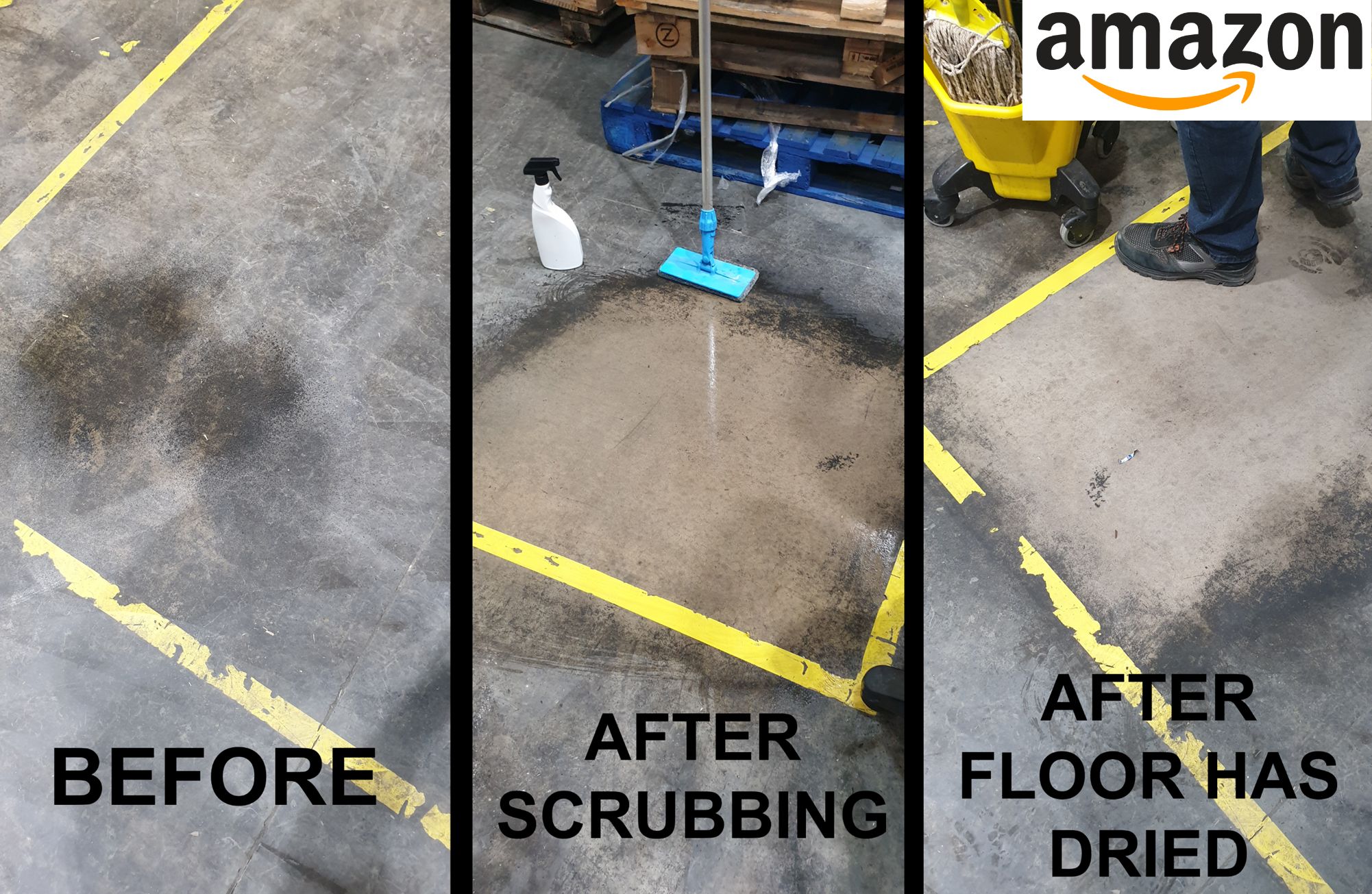
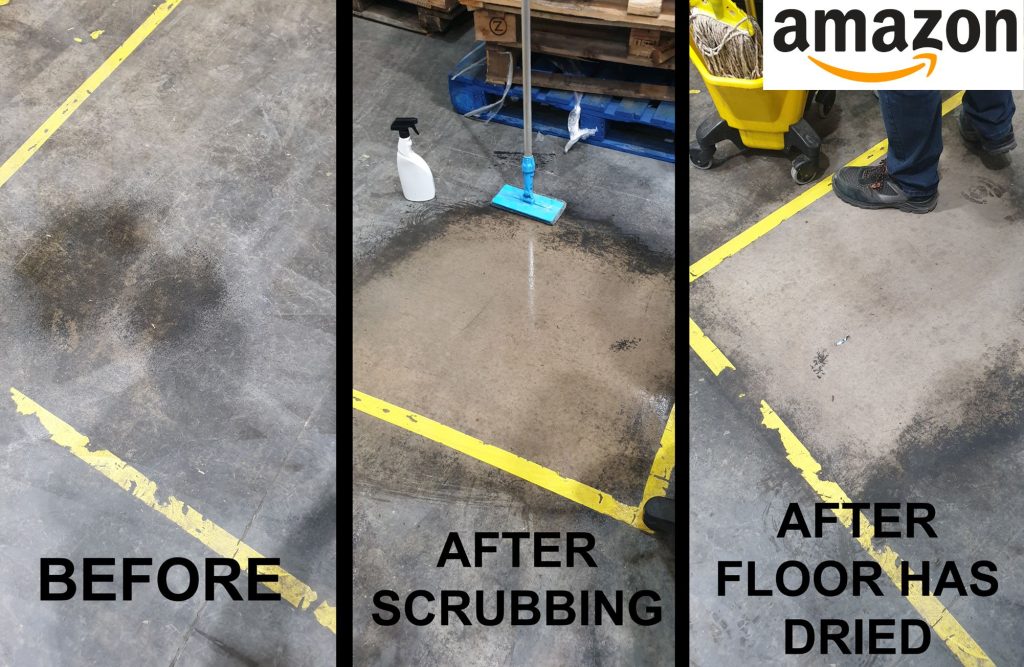
If you manage a warehouse floor, you already know the cycle: clean the tyre marks off, and within days they’re back in the same loading bays and turning points. Most advice on this treats it as a resurfacing problem — polished concrete, non-marking tyres, driver retraining, all genuine but expensive, slow-to-implement fixes.
There’s a simpler explanation most of that advice skips: standard floor cleaners don’t stop the floor rebonding with rubber, they just remove what’s already there. Every clean resets to zero, and the marks start rebuilding immediately.
Why the marks keep coming back
Forklift tyre marks form when friction from turning or braking heats the tyre compound enough to fuse it onto the floor surface at a near-molecular level. A standard detergent lifts the visible mark, but it does nothing to the floor’s surface chemistry, so the next pass of dirty tyres over a “clean” floor bonds just as easily as before. That’s why tyre marks in high-traffic areas (loading bays, racking ends, turning points) reappear faster than anywhere else: it’s not that they clean worse, it’s that they get re-marked more often.
The alternatives, and why most sites don’t use them
- Polished concrete or resin resurfacing – genuinely reduces marking, but it’s a capital project, not a cleaning fix, and doesn’t help the floor you already have.
- Non-marking (white) forklift tyres – reduces new marking, but means the expensive cost of re-tyring your fleet, and doesn’t touch existing rubber deposits.
- Driver training – helps at the margins, but can’t eliminate the tight turns and hard braking that busy loading bays require.
All three treat tyre marking as something to design around. None of them change what happens during routine cleaning.
The fix: a floor cleaner that stops the rebond, not just the mark
EN715 is used the same way as any scrubber-dryer floor cleaner, but its surfactant chemistry leaves a surface coating that reduces the floor’s ability to bind with tyre rubber and dirt on the next pass. In practice, that means marks build up slower between cleans, and the next clean lifts them faster, because they haven’t bonded as hard. It’s applied at 20:1 dilution for an initial deep clean on established marks, or up to 60:1 for routine maintenance cleaning — no equipment change, no floor resurfacing, no fleet retyring.
EN715 is best used in a scrubber dryer with black pads or very stiff brushes, which creates the friction needed to lift tyre marks in 1–2 passes. It was developed in conjunction with several major blue-chip companies who struggled to keep warehouse floors clean under heavy forklift traffic, and is also effective for removing tyre marks from painted safety lines without damaging the paint.
The bottom line
Tyre marks aren’t a one-off cleaning problem, they’re a recurring cycle driven by how the floor surface bonds with rubber on every pass. Fixing that cycle doesn’t require a resurfacing project or a fleet of non-marking tyres; it requires a floor cleaner that changes the bond, not just the visible mark. That’s the gap EN715 fills, using the scrubber dryer routine most warehouses already run.
FAQs
Why do tyre marks come back so fast after cleaning?
Standard cleaners remove existing rubber deposits but don’t change the floor’s surface chemistry, so the next pass of forklift tyres bonds just as easily as before.
Do I need to resurface my floor to stop tyre marking?
Not necessarily. Resurfacing (polished concrete, resin coatings) reduces marking permanently but is a capital project. A floor cleaner like EN715 that leaves an anti-rebonding surface layer addresses the same problem through your existing cleaning routine.
Can EN715 be used with our current scrubber dryer?
Yes — it’s designed for standard scrubber-dryer use with black pads or very stiff brushes, at 1:10-20 parts water dilution for deep cleans or up to 1:40-60 parts water for routine cleaning.
Does EN715 remove tyre marks that are already there, or only prevent new ones?
Both. It’s a heavy-duty tyre mark remover in its own right, dissolving existing rubber deposits from the floor surface (and from painted safety lines without damaging them), while also leaving a coating that slows how quickly new marks bond.