
Urinals are heavily used fixtures, and their cleaning is a critical part of the maintenance of a commercial washroom.
Whether it’s offices, restaurants, retail outlets or other public facilities, site managers need to ensure that any urinals are kept clean and well maintained. This includes achieving a consistently high standard of hygiene, visual cleanliness and functionality.
In this article, our expert team have shared a comprehensive guide to understanding how often commercial urinals need to be cleaned. This includes advice for avoiding the most common causes of failures or other unit problems, with the right cleaning and maintenance schedule.
Checkout our non-hazardous cleaning products for urinals:
- URI-Klearpath – Designed to prevent slow running urinals, by helping to keep pipes clear.
- URI-Klear – A powerful urinal unblocker descaler, which quickly and easily removes existing blockages (including heavy limescale build-up).
What causes urinal blockages and problems?
Urinals are particularly prone to build-ups and blockages, particularly in a commercial context.
Common issues include:
- Mineral deposits (particularly limescale) – When the minerals present within urine combine with hard water, limescale forms. Over time, this develops in the inside of pipes and traps, and can cause major blockages.
- Urine crystals – Also known as uric scale, this is caused when urine dries and crystals are left behind. These can also quickly build up in pipework and surfaces, forming hard and stubborn blockages.
- Foreign debris – If other objects are deposited in the urinal (e.g. paper towels) then this can cause an obstruction.
- Faulty flush systems – If there is a low flow of water, or if the flush system has a fault, waste and debris can quickly build up.
Generally speaking, if the urinal isn’t regularly maintained and cleaned, then this can further increase the risk (and escalate the development) of all these issues.
See our related guide for How to Clean & Unblock Waterless Urinals.
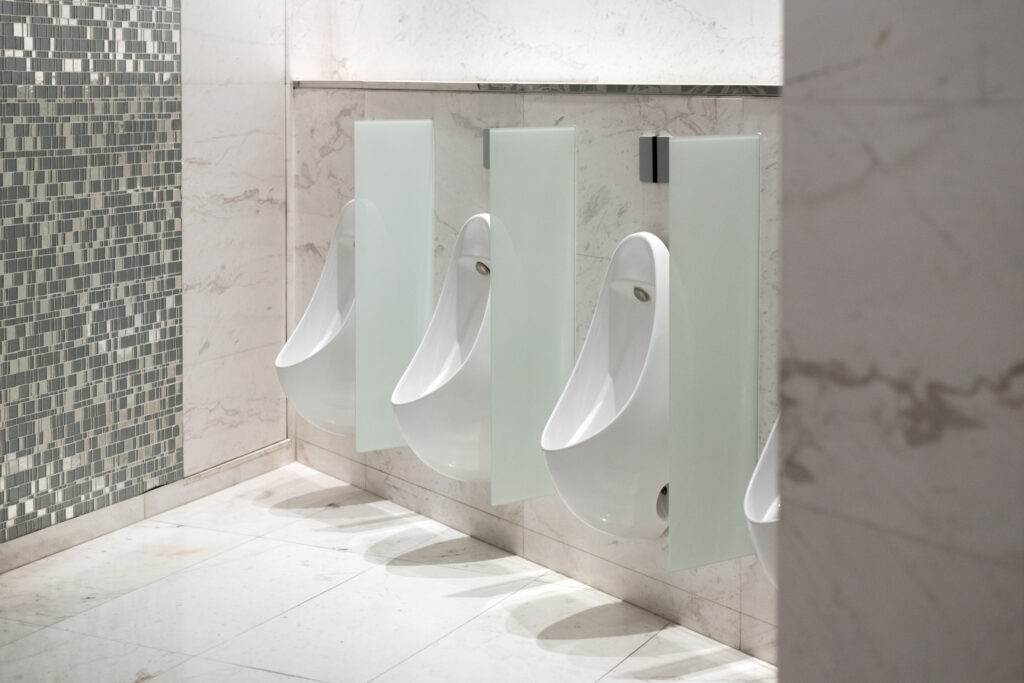
How often should commercial urinals be cleaned?
Consistent, thorough cleaning is key to tackling bacteria and odours, as well as debris and deposits from within the system.
How often a urinal should be cleaned varies, based on how often it is used and the context of the building.
Generally speaking, the recommended cleaning cadence for commercial urinals is:
Public toilets
- Use is very high – Clean at least once an hour
- Deep clean more frequently – Recommended 2-4 times a day (depending on the volume of traffic)
- With these facilities having high traffic, it’s key that cleaning is conducted on a regular routine basis.
Offices
- Use is low to medium use – Clean at least once a day.
- Daily cleaning ensures good hygiene standards are maintained, and that the workforce is protected against the spread of illness.
- It may be recommended to arrange additional spot checks and cleans of high usage touchpoints throughout the day.
Restaurants and other hospitality sites
- Use is high – Inspect and clean once an hour (then recommend once every 30 minutes during peak times of the day)
- Regular cleaning is key to customer impressions, experience and satisfaction.
- Deep clean around 2-3 times a day (depending on the number of customers that day)
Why is regular urinal cleaning so important?
Without regular and comprehensive cleaning, there is a high risk of the following issues arising:
- Bacterial growth
- Hygiene, health and safety risks
- Stubborn blockages
- Strong and persistent odours
- Expensive repairs (or replacements being required)
- Compromising your business’ brand reputation
Best practices for urinal cleaning and preventing blockages
Top tips for effective urinal cleaning:
- Keep an eye on how often the facilities are being used, and adjust your cleaning plan and cadence accordingly
- Follow a clear and structured cleaning routine
- Follow the right safety procedures when cleaning
- Ensure the facilities are well ventilated when cleaning
- Plan spot cleaning at regular intervals
- Combine spot cleans with scheduled maintenance and deep cleans
- Plan for regular deep descaling
- Invest in specialist preventative treatments, like URI-Klearpath
- If any slow drainage issues are spotted, act on them quickly, to ensure they don’t develop into a bigger problem
- Preventative maintenance schedules are absolutely imperative (more on this below)
Best practices for preventative maintenance
Look for specialist products, specifically designed for preventative and ongoing urinal maintenance, like URI-Klear.
We’d recommend choosing enzyme-based or chemical treatments, and using these on a regular, scheduled basis.
This is the most effective way to tackle build-ups before they are allowed to develop, and keep the urinal working at its optimum for the long-term.
At Bio8, we offer a premium range of specialist, high performance urinal cleaning and urinal maintenance products.
Our non-hazardous cleaning products include:
- URI-Klearpath – Designed to prevent slow running urinals, by helping to keep pipes clear.
- URI-Klear – A powerful urinal unblocker descaler, which quickly and easily removes existing blockages (including heavy limescale build-up).
By using these solutions together, you can significantly reduce the issues of the most common issues to affect urinals, including blockages.
To find out more about our dependable, high performance product range, or to place an order for your site, the Bio8 team are on hand to help.


